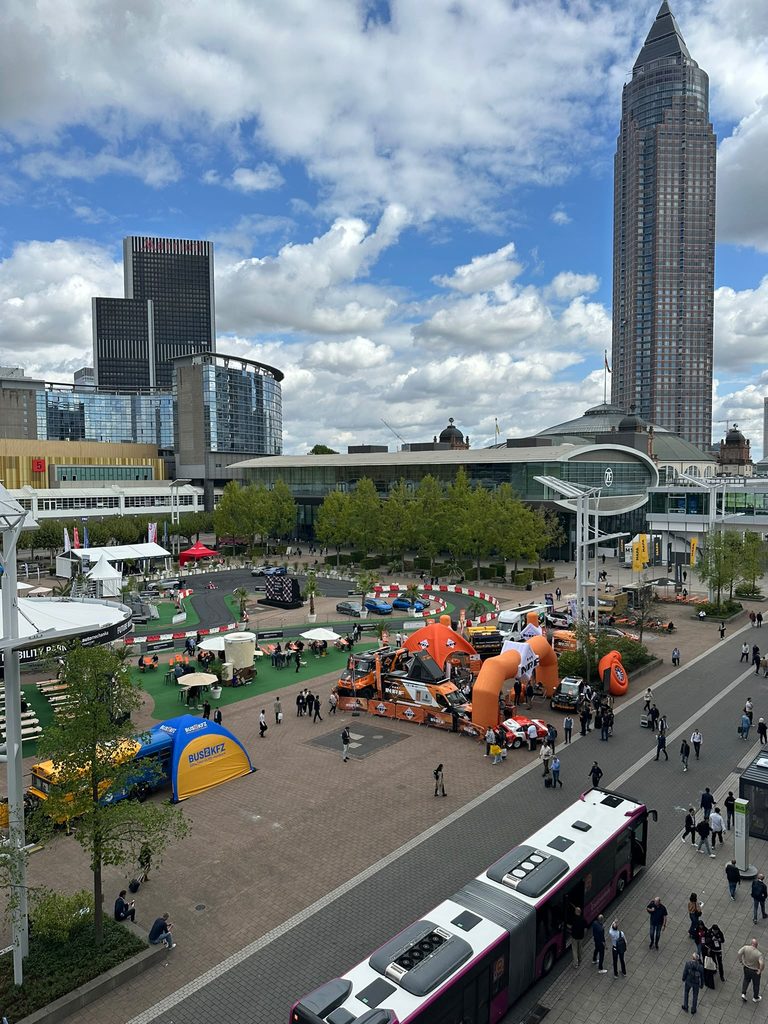

Last Thursday, we visited Automechanika Frankfurt, one of the automotive industry’s leading international events.
With around 4,400 exhibitors from more than 80 countries, the exhibition offered a valuable opportunity to discover the latest developments shaping the sector, exchange ideas with industry professionals and meet with some of our customers.
Beyond the scale of the event, one key message clearly stood out: vehicles are becoming increasingly connected and software-driven, but the technology behind them must also become easier to integrate, configure and use.
Several trends particularly caught our attention:
- Connected onboard electronics
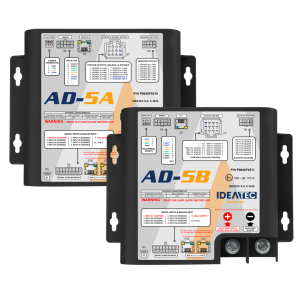
More and more vehicle functions need to communicate within one coherent architecture. At IDEATEC, this is already at the heart of our approach: centralising and controlling auxiliary equipment through intelligent CANBus-based solutions.
- Ergonomics and user experience
Technology only creates real value when it remains intuitive for the driver or operator. This is why we develop user-friendly interfaces and solutions that can integrate auxiliary functions directly into the vehicle’s original screen.
- Efficiency and sustainability
Sustainability is not limited to electrification. It also means reducing wiring, limiting the number of components, shortening installation time and developing modular solutions that can evolve with the vehicle.
- Flexibility and standardisation
Vehicle converters need solutions that can be adapted to different applications while maintaining a standardised and reliable architecture. Our systems are designed to simplify this process without limiting customisation.
Our visit confirmed that IDEATEC is fully aligned with the direction in which the industry is moving.
For us, smart vehicle integration should not add complexity. It should remove it.